Learn To Fly   Paramotoring   Clinics   Products   Gallery   Weather   Activities 
Fly Above All Home Page

More Newsworthy Pilots!

As seen in the:

Logo of Santa Barbara News Press

Winding up the hill from Cliff Drive, the narrow dirt road was muddy from recent rains and a hidden spring.
     Guiding his Toyota pickup up the grassy slope after unlatching a locked gate, Ken deRussy knows the twists of the back road that winds to the hilltop many Santa Barbarans still call "the Jesuit property," though it no longer is owned by the religious order. Since 1994, the 135 acres at Cliff Drive and Las Positas have been part of Las Positas Freindship Park.

Sky Pilots


     "I started driving up this hill in 1974," said deRussy.
     Here the veteran hang glider pilot helps men and women realize a dream - to fly.
     From the 380-foot overlook stretched picture-book views of the coastline. Across Cliff Drive was the green hump of the Wilcox property. Next came the tumbled spit where Arroyo Burro Creek spills to the sea. Off to the west, around a sweeping curve, jutted UCSB's Campus Point. Behind us rose the imposing wall of the Santa Ynez Mountains. Estates crowned nearby knolls.
     From a half-dozen trucks and sport vehicles who'd followed deRussy up the road (kept locked except when supervised flying takes place), drivers pulled out backpack-sized bags. Chad
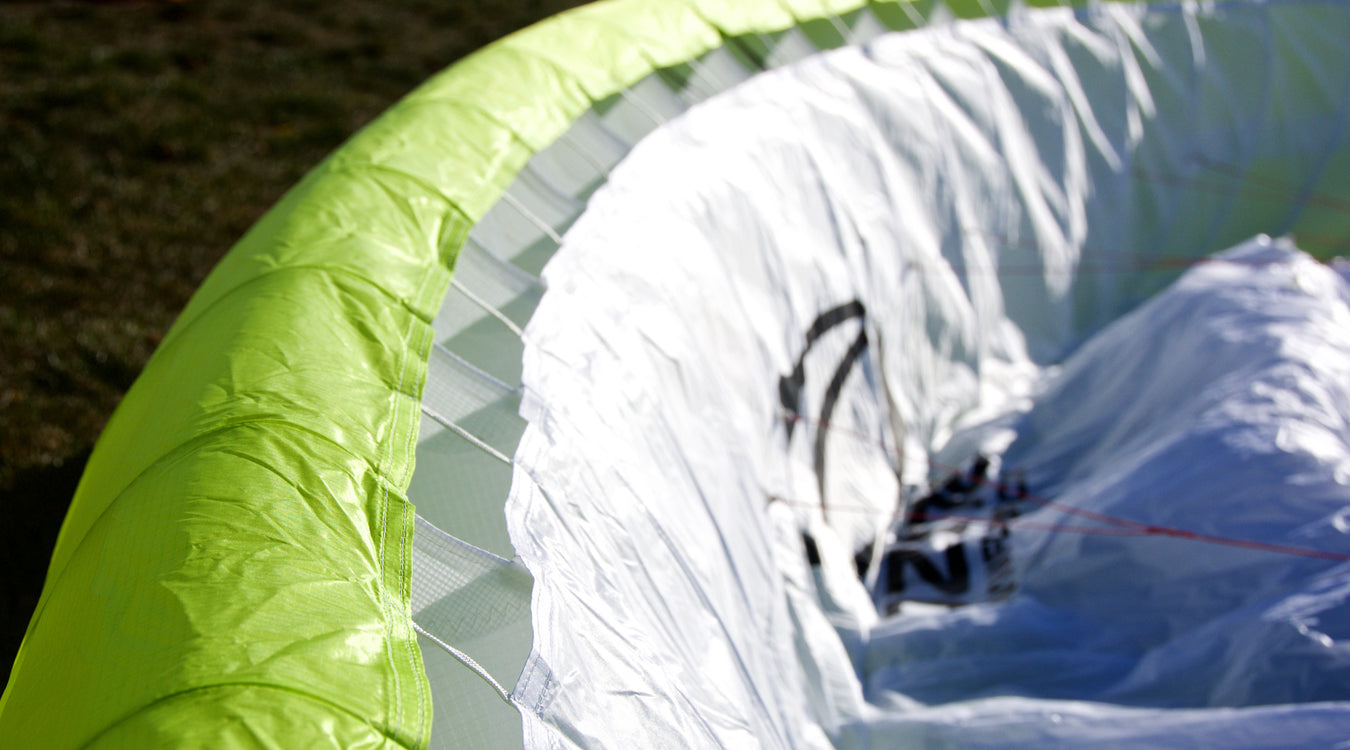
     Unfolding rainbow-hued nylon canopies, they were about to embark on a slightly saner version of 11-year-old boys jumping off the roof with an umbrella or bedsheet.
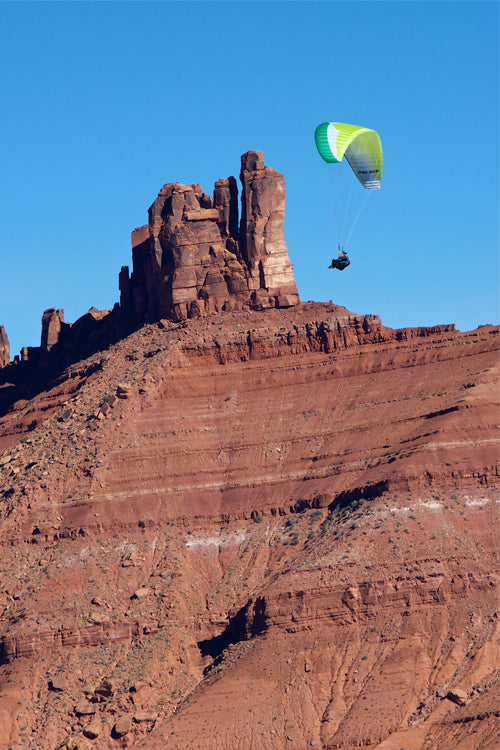
     The men were pilots of paragliders often seen by motorists, soaring like colorful birds high on unseen roadways of the air. The fliers were older than one might expect, 30s and 40s. They were a businesslike group, professionals: a doctor, a periodontist, a store owner on lunch break, an ex-military pilot, a taxi driver. One was retired.
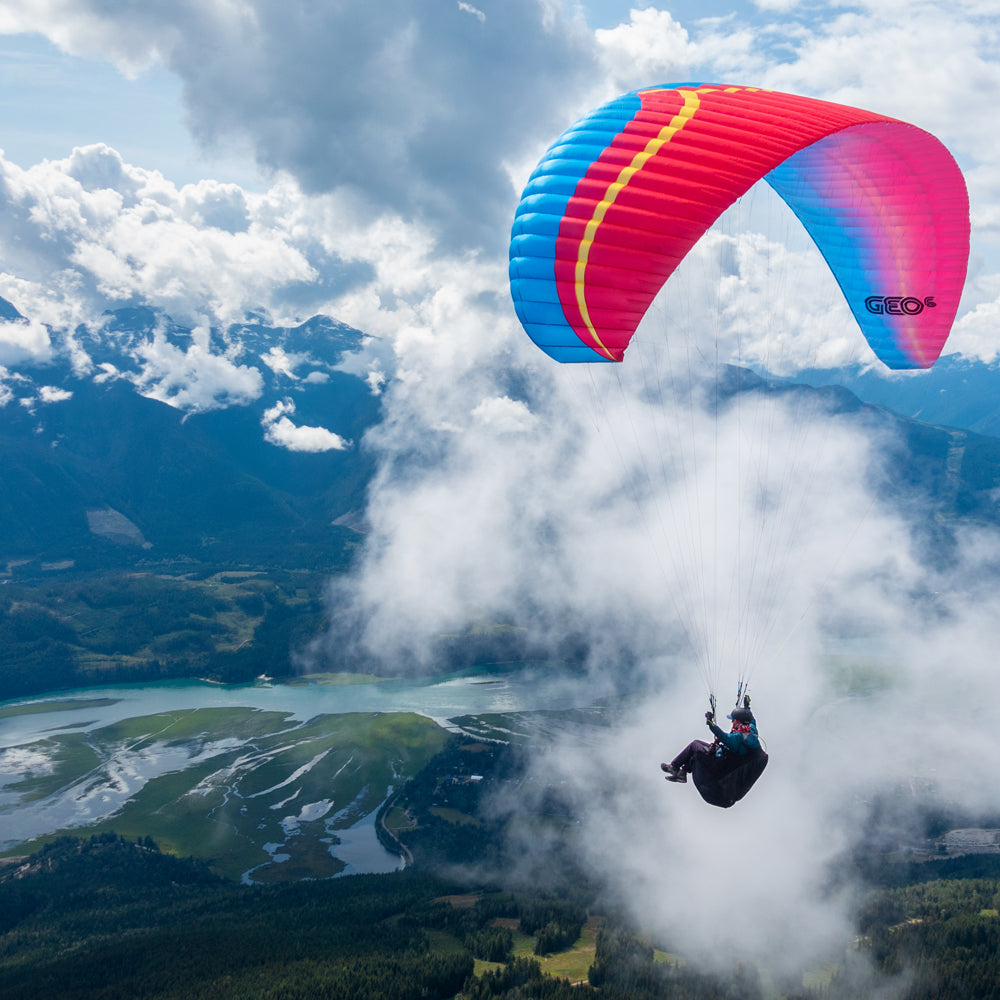
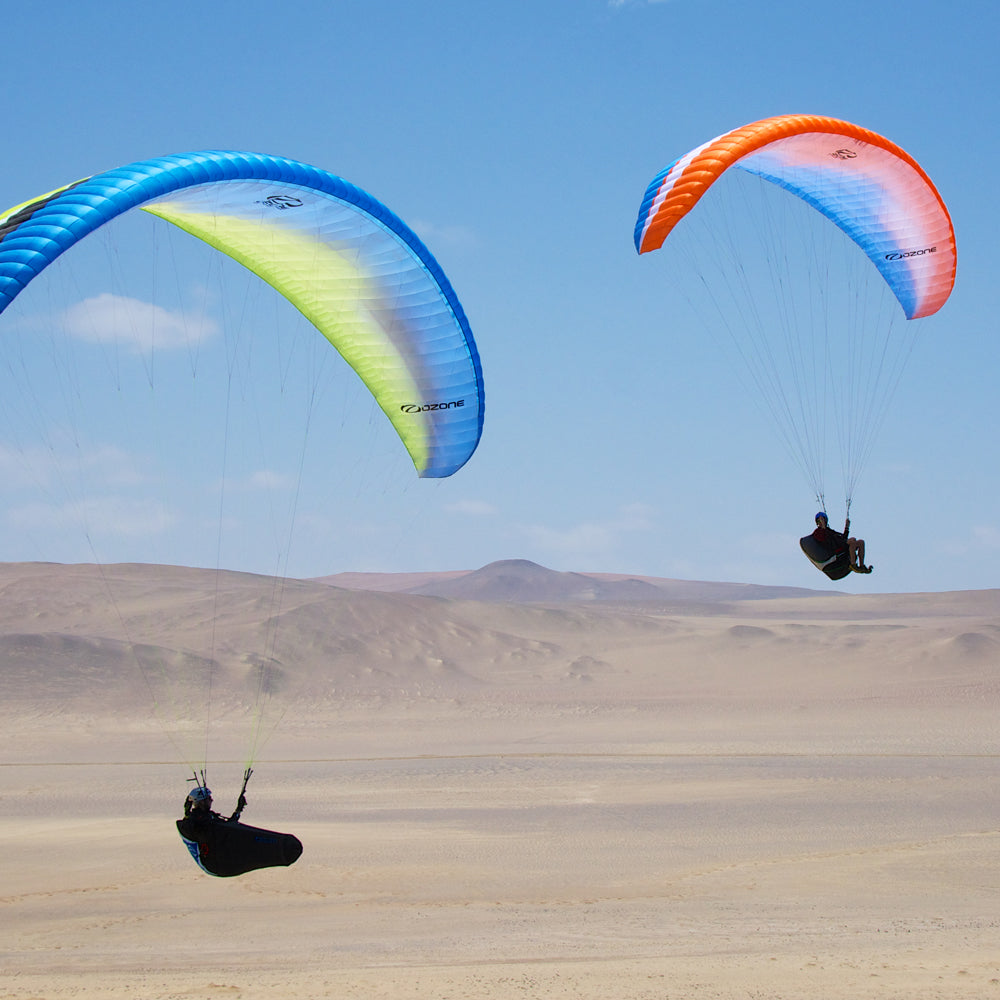
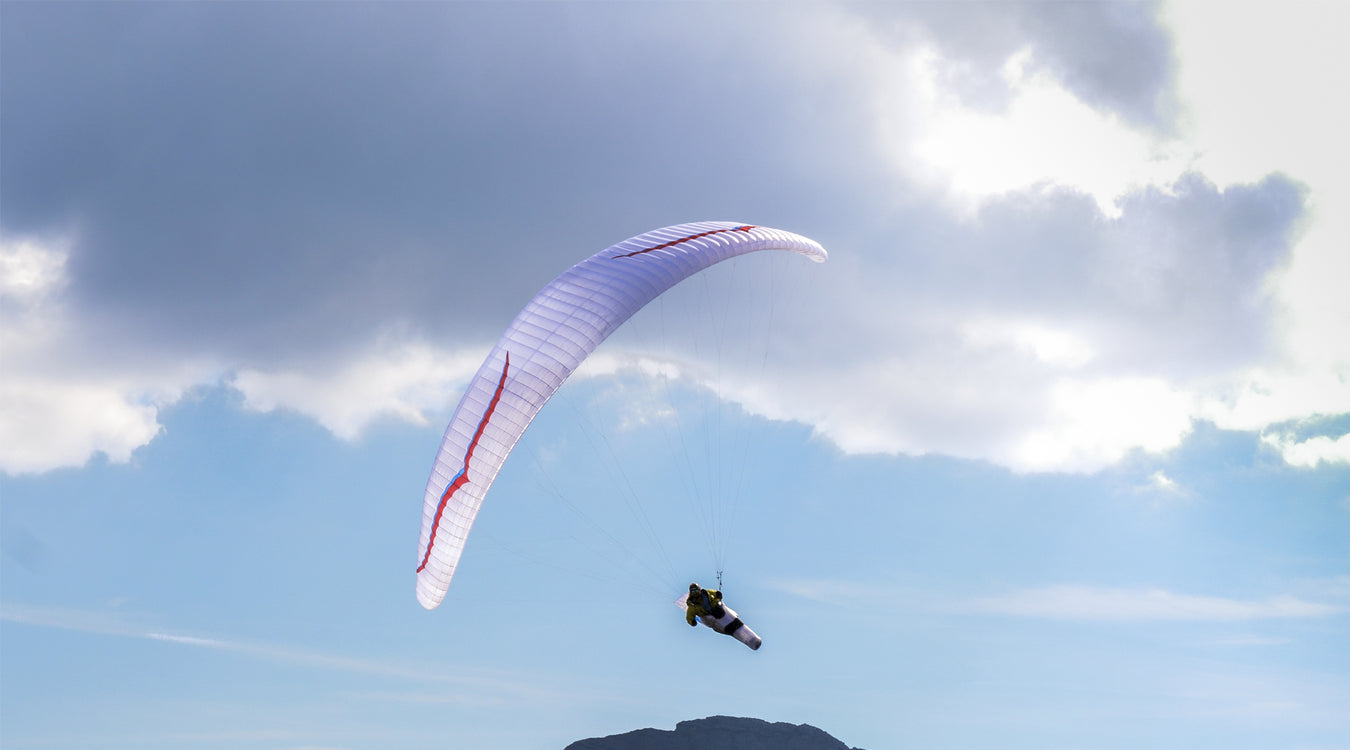
     They buckled on harnesses, pulled on helmets, checked sturdy lines attached to 30-foot parachute-like canopies. As the red, green and purple canopies billowed overhead, each man ran down the slope, leaped and flew.
     It wasn't the best flying weather. Gray clouds bunched over the mountains, signaling a coming storm. Flights were generally short. Landing on a meadow 200 feet below, the pilots tucked the canopies in oversized balls and climbed or rode trucks back up for another run.
     A word of clarification: While most people call everything soaring off Santa Barbara hillsides "hang gliders," the Cliff Drive craft were paragliders, a distinct new form of the sport using lightweight wing-like canopies. Paragliders are sometimes confused with parasails, towed by boats, deRussy said.
     "Paragliding came in the late 1980s," he said. To deRussy, the Mesa-area hill is virtual sacred ground, with flights taking off since the early 1970s.
     "It's probably the longest used hill for hang gliding and paragliding in the world." he said. "There's nothing in California and nothing in the West that comes close."
     While other hills preceded the local slope, they've since been built on or are no longer available, he said.
     A National Geographic article in February 1972 launched hang gliding, said deRussy. The article described a few California kids jumping off a Newport Beach hill in homemade gliders to celebrate the birthday of German glider pioneer Otto Lillienthal. Lillienthal flew in the 1890s, preceeding the Wright Brothers.
     "With the readership of the National Geographic, (hang gliding) took off," said deRussy. Young people were forerunners in constructing the simple aircraft.
     At least four Mesa area kids, aged 12 to 14, were among the sport's pioneers, he said.
     "They were the local inventors of hang gliding. It was a sport born of children in Santa Barbara. I tell kids it was a kid thing, not an adult thing. They first started on the slope above Monroe School. When Monroe School was built, they moved toward the ridge here."
     They lucked on a perfect spot. Every instructor deRussy has talked to calls the Mesa hill "the best training site in the country."
     There is Santa Barbara's unique southern exposure, prevailing south-west wind, protective mountains, a slope, a place to land, accessibility to town, benign weather.
     "There are more flyable days in the year than any other site in the country and probably the world." said deRussy. As an instructor and supervising monitor active in the Santa Barbara Hang Gliding and Paragliding Association, he spends five to seven days a week at the hill.
     Hang gliders enjoyed the blessings of the Jesuits who long owned the undeveloped property.
     He feels it's fortunate the Las Positas Park Foundation acquired the vacant property for public use, inheriting hang gliders as well.
     "We enjoy them," said Lynn Mayer, the park's new executive director. If not for recent rains, "I was going to try paragliding. It's a new experience. I was going to jump off a hill."
     Greg Steele, a retired marine pilot who was one of the recent paraglider pilots, is a member of the park foundation board. He relishes the sport's simplicity and quiet. Pointing to a soaring hawk, he said, "It's as close as we earthbound creatures can get to those guys."
     It's absolutely the best sport in the world," said Dr. Alex Soffici, medical director of Cottage Hospital's perinatal center, who once soared (the training hill) 40 to 45 minutes.
     "The ground began to heat up the air and it was simply catching the thermals as they are rising," he said. "To people who dream of flying as children, this makes all their dreams come true."
Paragliding Paramotoring Hang Gliding Clinics Products Weather Stories Used Links Activities

  Soaring Free Flight

  www.FlyAboveAll.com

Contact Us:

(805) 965-3733
info@flyaboveall.com

2707 De La Vina Street
Santa Barbara, CA 93105
Fly Above All, Inc.
American Paragliding Home Page   Paramotoring & Powered Paragliding  
  www.AmericanParagliding.com