|
Paragliders: Technical Data Used Items |
Just to give you perspective:
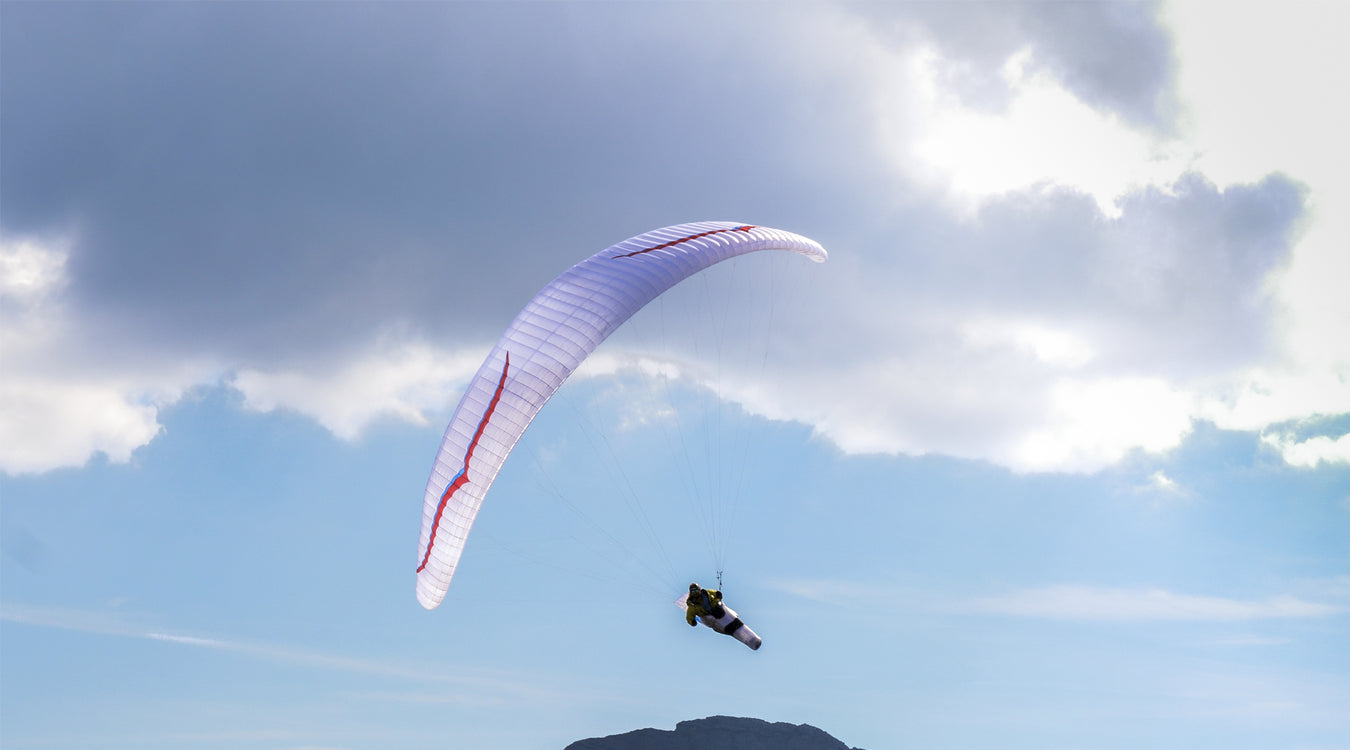
137 pounds naked weight (plus heavy gear) Paraglider pilot since 1991, 100-150 hours per year. Hangglider pilot since 1998, 100-150 hours per year. My last very high performance paraglider was a Kevlar (competition) lined Vertex 24. I participate in 1 to 2 manuevers clinics per year to keep my extreme envelope skills up. My current glider is a Kevlar line Carbon (S)
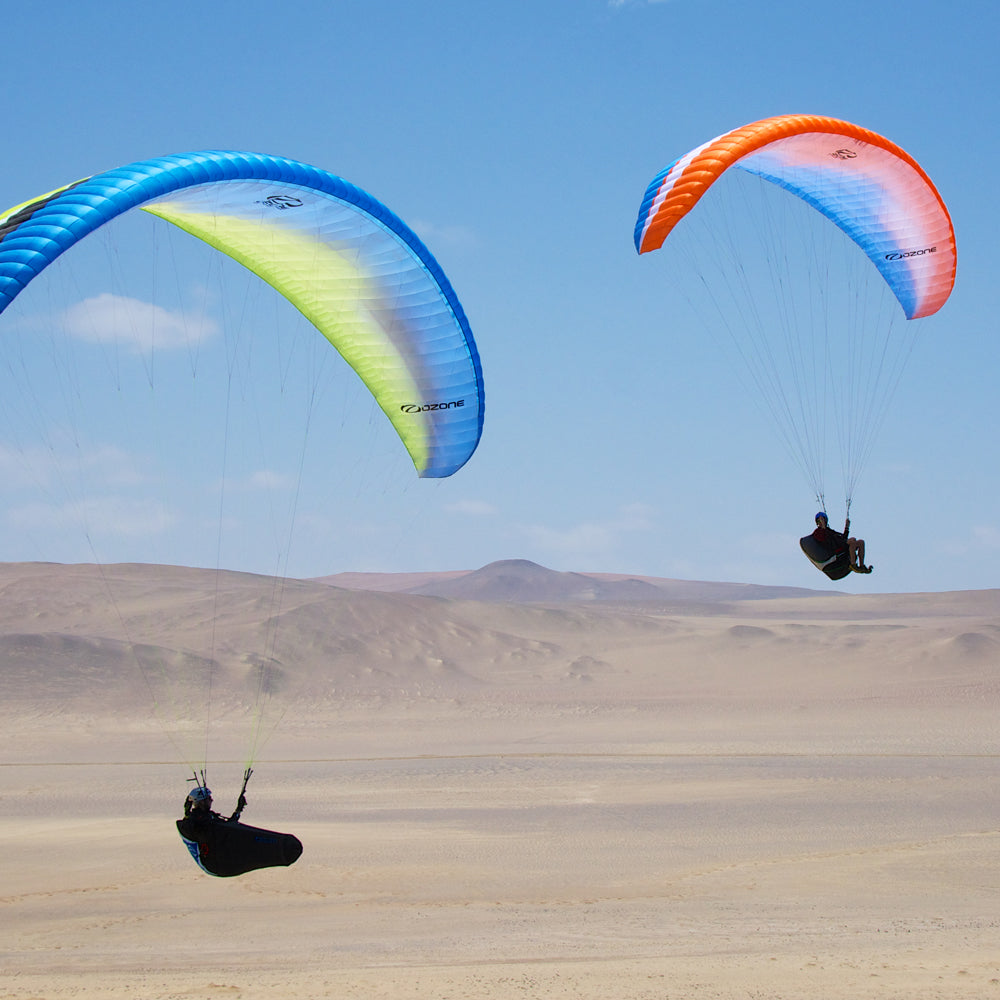
I loved the Vertex, and flew it for hundreds of hours, in very wide ranging conditions. It was a lot of work to fly, but if you were willing to figure it out, and expend the effort to make it fly, it was awesome. A thin line Vertex is a very different glider from the regular lined version. Also, uncertified. After hundreds of hours of flying, and many wonderful flights (including recoveries from occasional violent deflations in the Owens, Elsinore, and at Horse), I finally had a terrible cascade under locked (severely roped up) risers on a raging cloud day. At my home site. In San Diego, many of the best flights require scratching down low at times, in order to wait out lulls for the next great thermal. Not a very fun time on a high performance glider. Where in my opinion, you need to be scared any time you're close to the ground on a big day. After my Vertex incident, I spent about 50 hours on an Xray. A very nice glider, that recovers wonderfully, and seemingly consistently from some of the nastiest turbulence induced deflations. More importantly, it did not absolutely require me to be on top of it, babying it through its recovery process. Even though I continued to fly with a high performance glider attitude, my confidence level was raised a bit, knowing that if I missed something, there was a good chance that the Xray would not confront me with harsh reprisals if I was a bit late with my piloting attentions. So the Xray was great. Quite the fun XC glider, especially in really big, gnarly air. Why move to a Carbon, and in my case, why did I buy a Carbon before ever even flying it? In a word, Hannes. The Xray is a wonderful XC vehicle. But the Carbon was designed as the successor to the Xray. Better sink rate, glide, speed, and recovery characteristics. Based on my experience with the Vertex, I understood that it might take some work to get the most out of a Carbon, and that the reviews by low to moderate airtime pilots were not necessarily good indicators of the quality of the glider. So I took Hannes at his word, and ordered the Carbon. The thin lines? There is no comparison between a regular line, and thin line glider. If you like the sharp feel of thin lines, the clear answer is to live with the expense and hassle. So finally, after all that preface. Heres the short answer to your question. The Carbon S with thin lines, at my wing loading, is almost exactly on par with my old thin line Vertex. The only place where my thin line Vertex was clearly superior was in extremely light thermal conditions. If you were willing to work hard with a Vertex, you could climb up in the weakest of conditions. Now the Carbon is close to the Vertex, but... It took about 20+ hours of investigative flying to figure out how to get that good performance out of the Carbon. Sure, the Carbon makes a nice first impression, but it takes awhile to figure out how to fly it efficiently. And how to parse what it tells you about the air. The performance I extracted from the Carbon was not even close to the Vertex in my earliest flights. But it was fun. And at this point, I can honestly say that it allows me to do just about everything I could do in NOVAs last generation 2-3 glider (of course, an Argon is a different story, that I will not go into). Oh yes, raging cross country cloud days are really, really fun on a Carbon. Indeed, the case may be that I just was incredibly unlucky on that one fateful day on my Vertex. And could also get just as unlucky some day on a Carbon class glider. But it really feels like the Carbon is less likely to lock the risers up in a rope. And its hard to justify the extra performance of a modern 2-3, when nice gliders like the Carbon exist, and perform as well as last generation 2-3 gliders for advanced pilots. In my opinion, the Bandit will probably make a better first impression for many pilots. No brainer turning, its easier to fly efficiently from the start. And if your primary interest is agility for maneuvers, then the Bandit or Octane are probably better choices. Both gliders were tons of fun at the last manuevers clinic I attended. But then again, the Xray was also wonderful. I have not yet gone through a maneuvers clinic on the Carbon, but from watching Chad and others, it seems to behave quite nicely. After all that verbiage, the short answer is:
by Mario Ornelas |