| GPS Flight Verification | ||||||
|
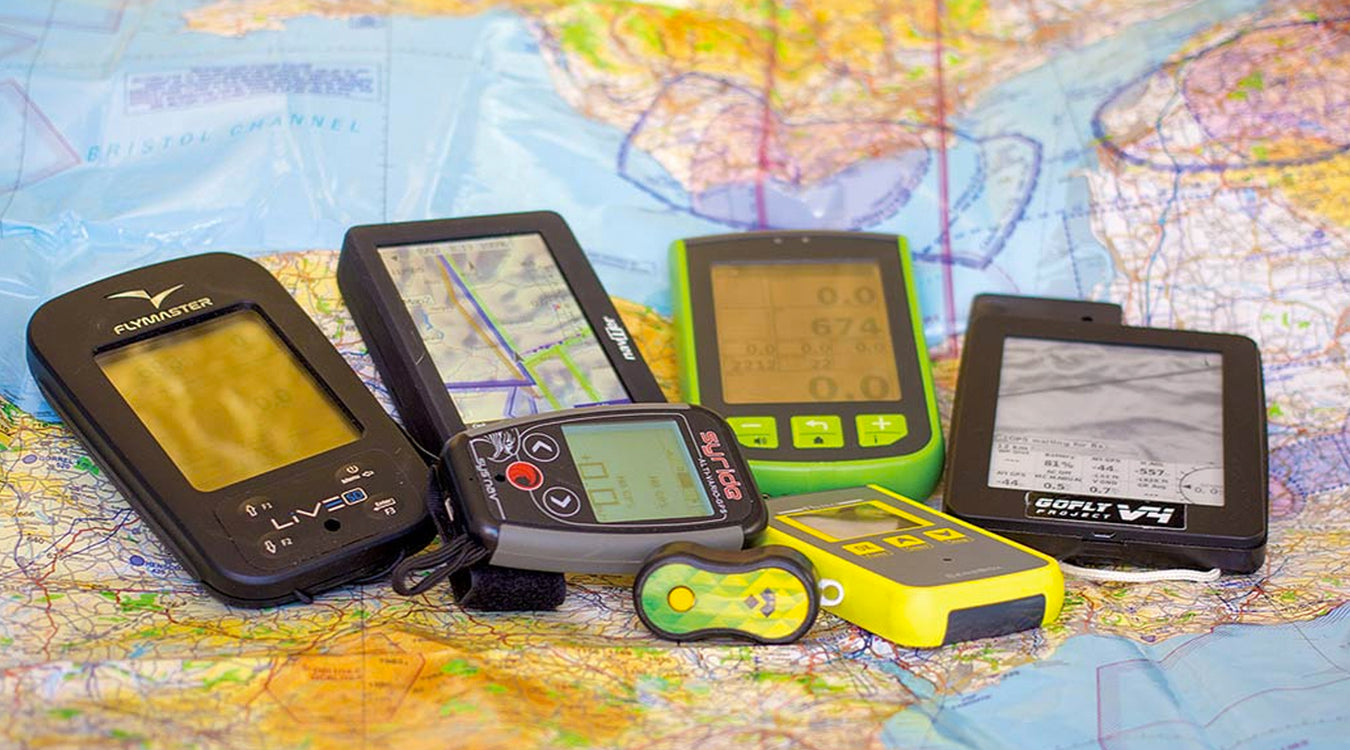
GPS verification of competition flights has now become the standard means of assessing performance of individual pilots during competitions. Two points that are commonly raised with discussion of GPS verification is "how accurate is it" and "how secure is it" As long as the data is collected directly from a Garmin GPS (or an instrument that conforms to the International Gliding Commission standards on GPS datalogging), changing the flight evidence becomes instantly obvious to the scorer. (More on this in the scorers instructions) For accuracy concerns, the GPS system suffers from 2 types of error:
Selective Availability is the
error intentionally added to the system by the U.S. government (in an
attempt to prevent the use of GPS for missile guidance). Selective availability
has been switched off, so this source of error has been removed. However,
it may be reinstated in times of national conflict. Calculation and geometric error are the error resulting from:
It may be that this error is in alignment with S.A. in which case your measured position may be as much as 400m from your actual position. In general this error will not be in alignment with S.A. and may consequently result in a more accurate position reading than if no error existed. When GPS flight verification was new, the GPS receivers were comparatively crude compared to today's offerings. As GPS receivers track more satellites simultaneously, they become more accurate and these concerns become less relevant. Besides, have you ever done an objective study on the accuracy of photographs as flight verification? In most cases a GPS with significant error is still more accurate than photos.
A GPS does not remember everywhere that a pilot has flown, just positions at every track log interval (as configured in the GPS settings). To make allowances for this, the track-log need not show a point within the sector. A point either side of the sector where a straight line between these points passes through the sector will be accepted. Marked points will be allowed as part of the track-log provided their position and recorded time are consistent with the track-log. When mark is pressed on a GPS the current position is saved into a waypoint. When enter is pressed after mark, the current time is added to the way points comment field (unless the pilot has entered a comment manually). If enter is pressed 1 minute after mark, the time recorded will be 1 minute after mark was pressed. This would make the waypoint inconsistent with the track log and the organiser would have to discard the waypoint. Even delays of a few seconds in pressing enter, after mark, may result in the way point being discarded. The rules state that the calculated speed for a pilot to fly from the last track-log point to the waypoint or from the way point to the next track-log point must not exceed the maximum speed logged between any 2 track-log points. This concern with producing waypoints as part of a track log becomes irrelevant if you are recording track log points with a small time interval in between. The newer GPS's hold more track log points, and so this problem can be easily avoided. Even with the older Garmin units that hold only 740 track log points, a small track log time interval can be used if you ration the amount of time that the unit is recording. With a time interval of 30 seconds, 740 track log points gives you 6 hours of continuous recording. You can reduce the time interval to, say, 15 seconds and you will still have 3 hours of continuous recording. Remember that there is no penalty for switching the recording off during the flight as long as the minimum time and data requirements are met. You must be careful not to exceed the number of track log points that can be recorded on your particular unit. When this happens, the early points will be overwritten and your start time might be lost. Keep track of how much battery life your instrument has as well, otherwise you might lose your goal or turnpoint information if your batteries go flat. To illustrate the situation of pressing "mark" then "enter" a few seconds later, assume a pilot flies at 36km/h in a straight line for 1 minute. During that time the 2 track-log points are recorded. If between them the pilot presses mark and enter (almost simultaneously) then the speed calculated between either of the track-log points and the marked point would also be 36km/h. If however, the pilot had delayed 2 seconds between pressing mark and enter, the calculated speeds would be very different. Let’s say that the position is equidistant between the points. Thus the time shown to get to the marked point would be 17 seconds, and the time shown to fly to the track-log point would be 13 seconds. This results in calculated speeds of 32 and 42km/h. If the marked point was 4/5 of the way to the second track-log point with the same delay the calculated speeds would be 33 and 54km/h. If 54km/h is faster than any other logged speed then the waypoint will be discarded. This system has been a great success from the competition organizer's point of view and the pilot's point of view. As a large expense (photo developing) is removed from the organizer's budget and the pilots get to see their flight instantly laid out on the screen and they can see, to a high degree of accuracy, where they flew in relation to the turnpoints. Before entering a competition, Pilots must check with the organizer to see which types of GPS units are supported by the verification program that will be used in that competition. In general, all the handheld Garmin instruments, The Aircotec Top Flight Navigator and the MLR GPS are acceptable, but be sure to check regarding the availability of suitable cables for performing the downloads and the compatibility of the individual instrument. All GPSs to be used with this
system should be set with the following parameters. Time Zone: GMT -8:00 (the
appropriate setting for your area). On a Garmin GPS the following
screens show where this data is set.
TurnpointsThe standard turnpoint sector is a cylinder with a radius of 400 meters
Start GateThe Start Gates are typically also cylinders with a radius of 5 or 10 km. Start sectors may also be lines or smaller cylinders that are separate from the launch point.Advantages in using GPS Track Log for a Start Gate are that all GPS tell the same time, exactly. From the Track Log the time that the glider crosses the start line, or crosses the edge of the sector can be interpolated to the nearest second. Recommended practice would be to use 15-minute intervals in start times. This stops any problems with the position error, and stops the cat and mouse games that pilots commonly play at the start gate when start timing is done to the minute or second. The program automatically calculates the time that the pilot crossed the edge of the start sector. If the pilot crosses the edge of the sector more than once, that is no problem as the last crossing is the one that is used as the start time. Use of waypoints as extra track log pointsExtra track log points can be produced to ensure that you have a point plotted inside the sector by pressing "MARK" and "ENTER".
In this case the pilot flew
through the sector, however, no points were logged within sector and the
straight line joining the logged points did not pass through the sector. It is good policy to always use the "mark+enter" procedure unless you are absolutely sure that you have track points logged in the sector. Be aware that if you are flying the course using the "Route" function, the GPS will switch to the next feature that you are aiming for when you cross the bisector of the two course legs.
If this pilot is following
a 'Route", the GPS will tell him to head towards the next point before
he has reached the one he was flying towards. This can lead to the pilot
missing the Turn Point altogether! GoalIf GPS time is being used to calculate goal-crossing times, the problems with even a small position error can swap pilots placings as they cross the finish line if they come in over the goal within seconds of each other. There is also another error in that some GPS's log UTM time and some log GPS time, which currently has about a 13 second difference in time. Be prepared to listen to pilot's accounts of who crossed before whom to sort out any possible glitches.
Conclusion The system has been working very well, and is very popular with the pilots as they would watch each other's "flights" as the computer laid their recorded flight on to the course. The download and verification process is achieved quite quickly. Usually less than one minute per pilot would see turnpoints verified or denied without ambiguity, and start (as well as finish times if wanted) times measured and the information entered into the scoring program.
|